
Love Versus Scarcity: Deepening our Friendships 

A woman holding a cold compress on her friend's forehead while sitting on a couch

Image generated by WordPress AI

In a consumeristic and isolated society such as ours, it makes sense that there is often an unspoken level of competition in numerous social media or face-to-face interactions. It is common for individuals to see others’ feats and compare them to their own. Or, at minimum, individuals view people as obstacles, rather than as gifts. This is what Pastor Zac Yonko (MDiv, Ashland) defines as scarcity, the idea that the reflection of any social outcome affects the individual, even if they are completely uninvolved in the circumstance.  

It is commonplace to believe that we, as humans, are somehow going to receive less if someone else gains more. I previously wrote about envy, where we often loathe not having what others have, but what if that complex is deeper than simply envy, and we are worried that just because another person received a blessing, it lessens our chances of receiving the same blessing? At first glance, this statement seems preposterous. But when the previous statement sinks in, we realize that there may be more truth than we realize.  

Many adults in today’s society are facing what many have called a “delayed adulthood,” or the idea that many individuals are pushing back different aspects of adulthood for other desires, which oftentimes can be a holy pursuit, but that can often lead to a delay in other aspects of life, including dating relationships, engagement, marriage, purchasing a home, and kids. It is easy to achieve many things in life and yet still desire a stronger sense of emotional attachment.  

Bryan Loritts (DMin, Liberty) notes in his text, Enduring Friendships, that many perceived “successful” individuals have difficulty obtaining and maintaining significant friendships because they feel a strong need to control specific relationships, which can often lead to regretful circumstances. We all have a desire to be known and loved, but some of the avenues we seek to fulfill this desire, even if the world perceives them as holistic, may not truly be holistic at all.  

Our desire to be enough is simply found in Jesus Christ, solid earthly lifelong friendships and relationships have the foundation and understanding that there is more to a relationship that simply trying to gain control of a social situation, but rather, there is a sense of mutual care between two parties.  

With the desire to find our needs met in Christ, we understand how best to limit the scarcity mindset in us: to truly love others. Yonko defines love as asking, “instead of asking what will happen to me (scarcity), love is to ask what will happen to them if I do not do something to help.” 

Relationships on both ends, as both the sender and the receiver, will likely improve through the effort of caring significantly for those God has placed in our lives at certain moments. These encounters may simply change how we perceive specific friendships in our lives. Individuals are not tools, but rather, are other beings who are made in the image of God. As we continue to live our lives for Christ. Let us all consider that true investment in specific friendships may involve thinking more outside our own interests. 

Community, Risk, and Relationships: Connecting with Others in 2026 

(Image generated by WordPress AI)

I have felt a newer, unexpected sense of anxiety ever since turning 30 last year that was hard to pinpoint. In a similar way to when I first turned 18, I felt that 30 ushered in a new era I was not ready to embark on. There is certainly some level of concern that I am not as young as I used to be, and I will only get older from here, but that did not satisfy my understanding of why I had an additional level of concern that I had not had before.

However, I believe I finally identified the source of this anxiety last night while listening to the most recent episode of The Holy Post Podcast. Phil Vischer, Skye Jethani, and Kaitlyn Schiess were prompted to discuss understanding value and purpose following a recent article by David Brooks in The New York Times. The discussion on the Holy Post led to some observations I think are worth noting regarding any relationship effort required in what Brooks calls “The Great Detachment.”

What Brooks discussed, and The Holy Post elaborated on, was the idea that many younger people feel that the risks often associated with life, specifically the investment in relationships, can lead to concerns that may push people away from creating avenues of vulnerability. Over the last 20 years, our culture has seen a significant shift in cultural understandings of the value of organized love of country, religion, birth rates, and involvement in different communities. Instead, the only value that has grown in modern American society is financial growth.

With fall of these generally perceived positive morals, the rise of self-fulfillment through finances, and the ability to compare our situations with others thanks to social media, our society tends to over-evaluate the physical risks of what a long-term sustained relationship—certainly could be romantic, but even a strong sibling-like friendship with another person—instead of building such relationships with the understanding of the potential risks of such relationships, including a health concern or death, a financial strain, the inability to leave such relationship to connect with other individuals, and the risks continue on and on. Brooks’s conclusion is that, instead of trying to be self-sufficient through a materialistic, uncertain viewpoint, the only way to sustain attachment is through relationship development.

I certainly related to the aforementioned points. I see the effort my sister and brother-in-law have to put into raising my baby nephew, or good friends struggling through relationship concerns, and I personally do not envy those situations, and thus, I realize that these situations that I have previously romanticized about (no pun intended) actually are new found sources of anxiety for me in addition to similar anxieties that include fears on my end that I will be less valued in relationships due to my nonprofit salary and student loan debt that I hold; therefore, I feel like that I should not put forward the risk of these potential issues arising. Additionally, that is partly why, honestly, I am probably not as motivated to get into shape or continue towards a path of self-improvement in other facets as I have been previously, because I have experienced similar situations in which I made a strong effort to “fix myself,” and it did not have as many life-altering (good) consequences as I had anticipated.

Our society is not normalizing risk in today’s world, as data on modern American values suggest that transactional relationships are on the rise and transformational relationships are continuing to decline. Jethani and Schiess, however, argue that Christians are called to a countercultural risk perspective. A Godly life is meant to have relationships with vulnerability. Jethani cites Alan Noble’s Text, Getting Out of Bed: The Burden and Gift of Living, to suggest that our motivation to get out of bed is simply to fulfill others’ dependence on us. 1 Peter 4:8-10 (NIV) states, “Above all, love each other deeply, because love covers over a multitude of sins. Offer hospitality to one another without grumbling. Each of you should use whatever gift you have received to serve others, as faithful stewards of God’s grace in its various forms.”

Relationships are truly the only thing that matters in this life, as they are the only thing that we can take up to heaven. Since we are made in God’s own image, we are called to have relationships that God designed us to have with one another. God modeled this perfectly through the sacrificial death and resurrection of His son, so that we may commune with Him directly.

Not all of us are extroverted or are confident in building additional relationships in our lives beyond the bare minimum. Some of us may not even want to continue associating ourselves with our family members or once close friends—some of these situations are dangerous, and let us not invite that danger back into our lives. However, if there is a path for safe reconciliation in those relationships, know that God is with us in these situations. Regardless of your situation, know that his grace is endless and will help us push through the risks to continue growing our capacity to build authentic relationships.

Understanding Modern Communication Through The Lens of Comedy

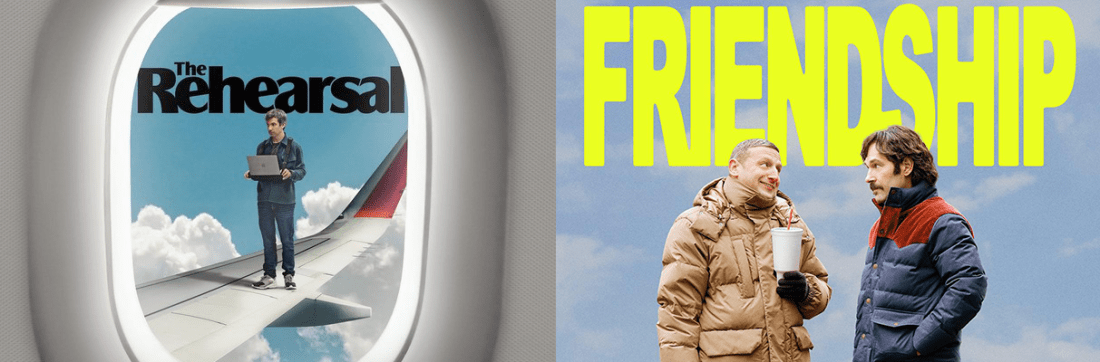
Lately, we have been fortunate enough to have what I believe are the generation’s best two comics, Nathan Fielder (Rehearsal, Season 2) and Tim Robinson (Friendship, full-length movie), released original content in May. To say we’re spoiled is an understatement. Additionally, both of these recent works have really helped us appreciate why they are great pieces of art.

Both comedians really toy with the idea of cringeworthy and/or awkward communication. In a society where in-person verbal and nonverbal communication continues to decline, both comedians effectively lean into this concept.

Fielder has focused more on addressing awkward communication moments and utilizing his “Fielder Method” to help learn about his subjects’ verbal and non-verbal tendencies. At the same time, Robinson expresses all the inner thoughts that we all have had from time to time, albeit in a humerously great exaggeration.

I am currently enrolled in a Global Leadership course where we are discussing different cultural communication frameworks. The communication framework that America and many Western nations currently exhibit is a “Linear-Active” culture — one in which we are focused on a specific timeframe and agenda in our communication with one another. Both comedians push that boundary, and inadvertently (or maybe intentionally in Fielder’s case) challenge the status quo in communication styles. Arguably, both push “Reactive” culture tendencies, where opinions are formed based on listening to others before forming strong opinions.

This is why it makes sense that I have been enjoying West Coast Swing. The whole dance is based on hearing the counts of the music, “listening” to your partner, and then reacting within the dance. It is a very potent form of non-verbal communication.

My good friend, Pastor Zac Yonko (MDiv, Ashland), noted the theological connections.

From a pastoral perspective, I think there’s a beautiful theological layer here. The gospel is ultimately a story of divine communication — God choosing to enter our awkward, broken, miscommunicating world through the Word made flesh. Jesus didn’t avoid cringe; He entered it. He touched lepers, asked hard questions, told disruptive parables, and wept in front of people. That’s the kind of non-linear, reactive, embodied presence of both comedians.

Satire, when done well, doesn’t just critique; it invites repentance and curiosity. And maybe, in a world of endless noise and scripted agendas, what we need most is the humility to listen — to the Spirit, to one another, even to absurdity — and to laugh our way back to being human again.

Although both Fielder and Robinson are using humor to exploit modern communication tendencies. Satire may very well be the most effective form of learning how to communicate in the 21st century.